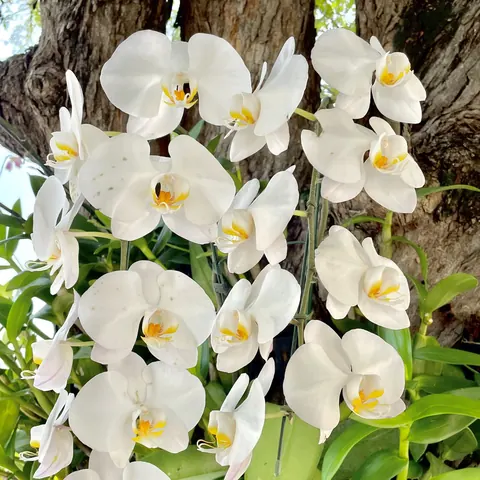
Indoors · deep shade
Phalaenopsis
The moth orchid. The first choice for lobbies, offices and shaded verandahs.

01 · Orchids
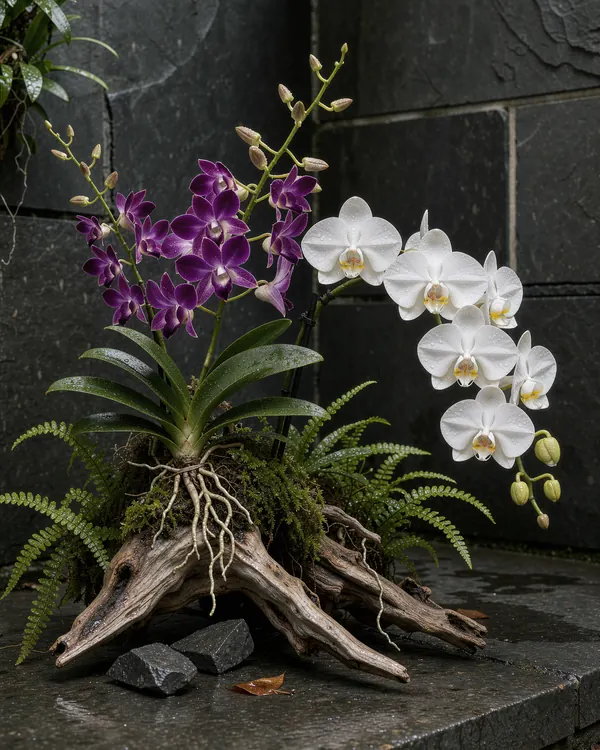
Most orchids that flourish in Mumbai are epiphytes: they grow on bark, in baskets or in open bark media, not in garden soil. We design orchid gardens, tree-mounted plantings, orchid walls and indoor displays around the light, air and water each spot really gets, then keep them flowering.
Scope
Six ways we bring orchids into a landscape or interior. Each can be taken on its own or as part of a larger project.
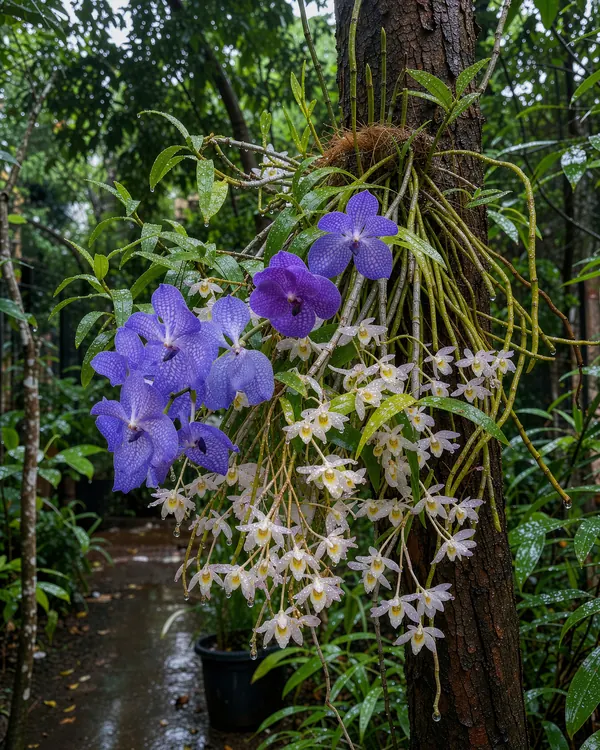
Dendrobium, Oncidium and Vanda tied onto frangipani, mango and other rough-barked trees with coir and soft ties, placed for morning light and shelter from the harshest afternoon sun.
Raised, free-draining beds and basket clusters for sun-loving Vanda and Mokara hybrids, with misting where the air is dry.
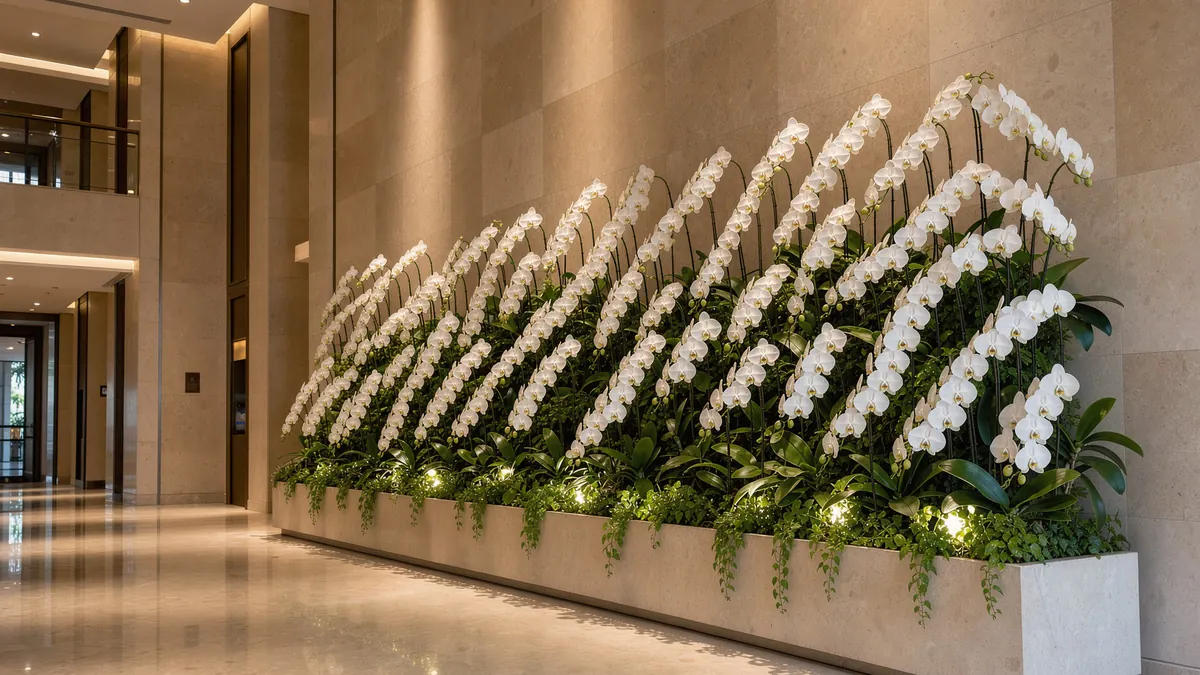
Mounted panels and living walls of Phalaenopsis and Dendrobium for lobbies, courtyards and feature walls, with drainage and access built in for upkeep.
Potted orchids arranged in planters for receptions, hotel lobbies and boardrooms, swapped as blooms fade so the display stays in flower.
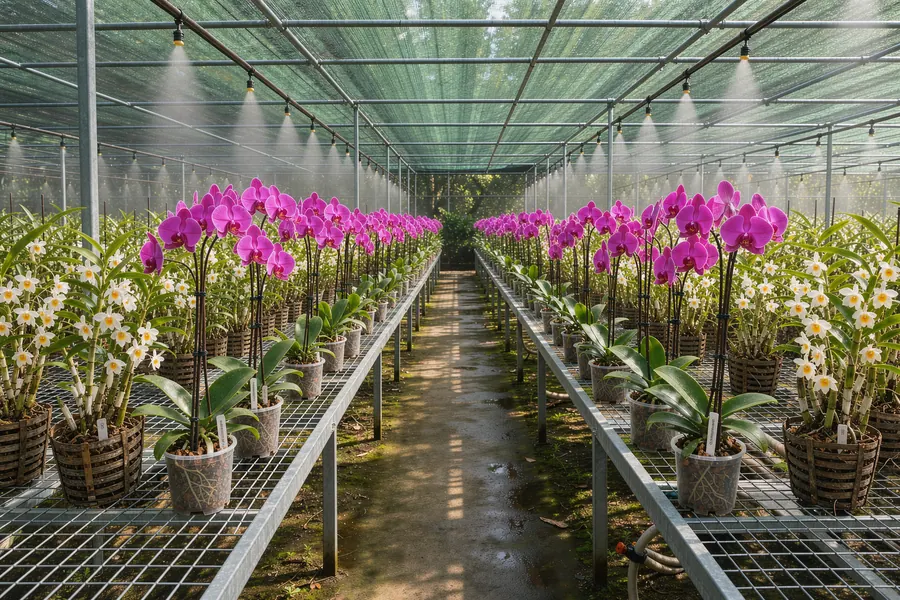
Shade-net structures, benches, misting lines and drainage for homes, farmhouses and institutions that want to grow orchids all year.
Scheduled visits for watering checks, feeding, staking flower spikes, repotting, pest and disease control, and replacing plants that are past their best.
Choosing well
Light is the deciding factor. Shade figures are the shade-net density usually used for each group outdoors.
| Orchid | Light | Best placement | Notes |
|---|---|---|---|
| Phalaenopsis (moth orchid) | Bright, indirect; heavy shade outdoors (around 70–75%) | Interiors, shaded verandahs, lobbies | Long-lasting flower spikes; keep water out of the crown and away from direct AC drafts |
| Dendrobium (Sonia, Emma and similar hybrids) | Bright, filtered; around 50% shade | Balconies, terraces, tree trunks, pots | Flowers through much of the year and copes well outdoors in Mumbai |
| Oncidium (dancing lady) | Bright, filtered; around 50% shade | Tree mounts, hanging baskets | Sprays of small yellow flowers; likes moving air |
| Vanda | High light; roughly 30–50% shade | Slatted baskets, mounts, open trees | Aerial roots need daily watering or misting in the dry season |
| Mokara (Vanda hybrid) | High light; takes some direct sun | Sunny beds, borders, baskets | Vigorous and long-flowering; widely grown for cut flowers |
| Cattleya | Bright light, good airflow | Pots and mounts on terraces | Large, often fragrant seasonal blooms; let the medium dry slightly between waterings |
Read more: Orchids for Mumbai: which ones grow well, and where
The orchids
Chosen for Mumbai's warmth and humidity. We match each one to a spot's light rather than forcing a favourite where it will not flower.
The moth orchid. The first choice for lobbies, offices and shaded verandahs.
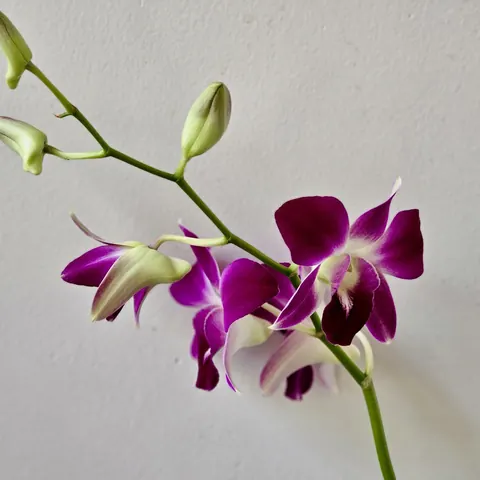
Sprays of white, purple or bicolour flowers; easy on balconies and tree trunks.
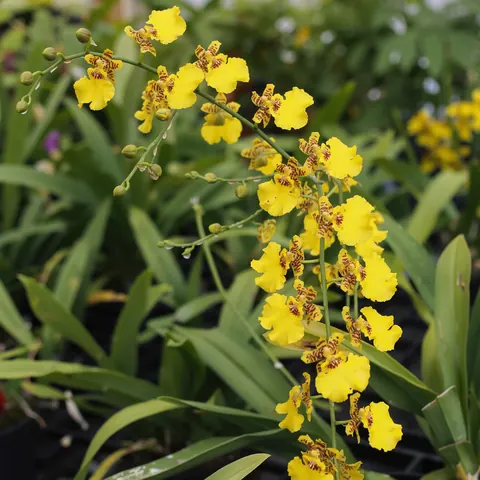
Clouds of small yellow 'dancing lady' flowers for mounts and baskets.
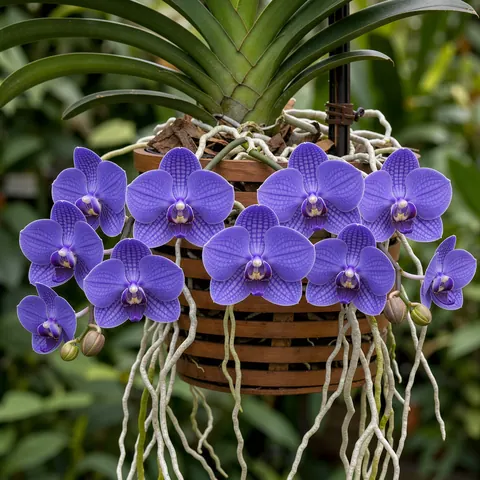
Bold, often blue or violet flowers on plants with long aerial roots.
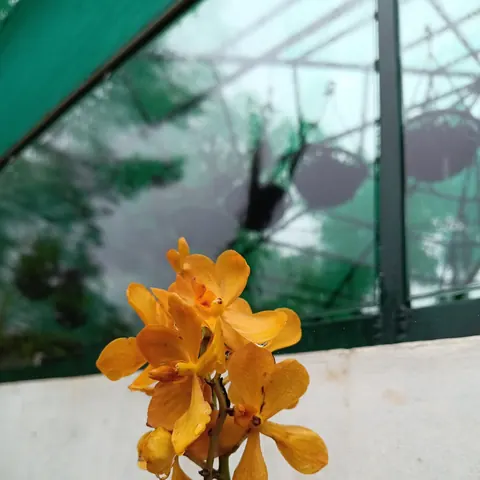
A sun-tolerant Vanda hybrid for beds and borders, in warm colours.
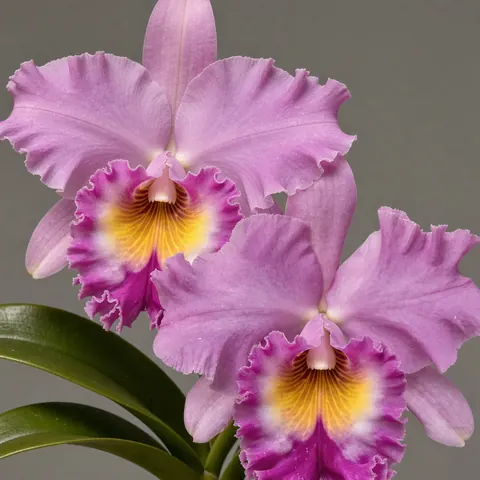
Large ruffled seasonal blooms, often fragrant; good on bright terraces.
Method
The order matters as much as the materials.
We check sun hours, shade and airflow at each spot through the day, and note AC vents, wind and where sprinklers throw water.
Each location gets the orchid that suits it and a way of growing it: tree, basket, panel, pot or bed.
Plants are acclimatised to their new conditions before they go up, so the move does not cost a flowering.
Misting or drip where it is needed, and a feeding plan for the season.
A simple care card for each group of plants, or scheduled care visits by us.
Growth surges in the humidity. The risk is rot, so crowns are kept dry, air kept moving and heavy feeding paused while plants sit wet for days.
Drier air. Mounted orchids need more frequent watering or misting, and many Dendrobiums and Vandas flower well.
The hardest months. Extra shade, early-morning watering and misting protect plants from heat stress.
Yes. Mumbai's warmth and humidity suit many tropical orchids. Dendrobium, Oncidium, Vanda and Mokara do well outdoors when they are mounted on trees, hung in baskets or grown in free-draining media, with shade from the harshest afternoon sun. Phalaenopsis is better kept in shaded verandahs or indoors.
Phalaenopsis, the moth orchid. It tolerates indoor light, its flower spikes commonly last two to three months, and it suits planters and arrangements. A display stays in bloom when plants are rotated as their flowers fade.
It depends on how they are grown. Potted Phalaenopsis indoors usually need water when the medium is nearly dry, often about once a week. Mounted Vandas and Dendrobiums outdoors may need daily watering or misting in the dry months and very little during the monsoon.
No. Orchids are epiphytes, not parasites. They use the bark only for support and take moisture and nutrients from air, rain and debris, not from the tree.
Yes. Care programmes cover watering checks, feeding, staking flower spikes, repotting, pest and disease control, and replacing plants that are past their best.
Works with
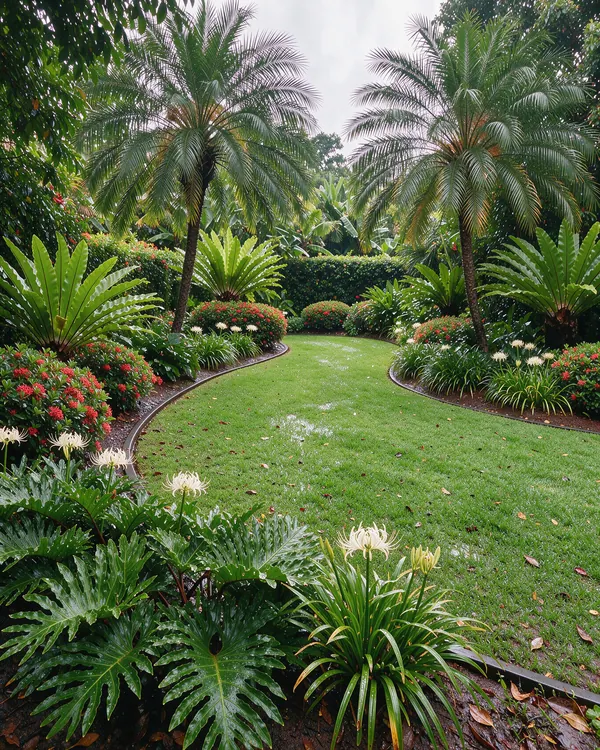
Soil, lawns, trees, palms and layered planting for gardens, terraces and podiums.
Explore softscape →
Drip, sprinklers, misting and automation, designed with the planting, not after it.
Explore irrigation →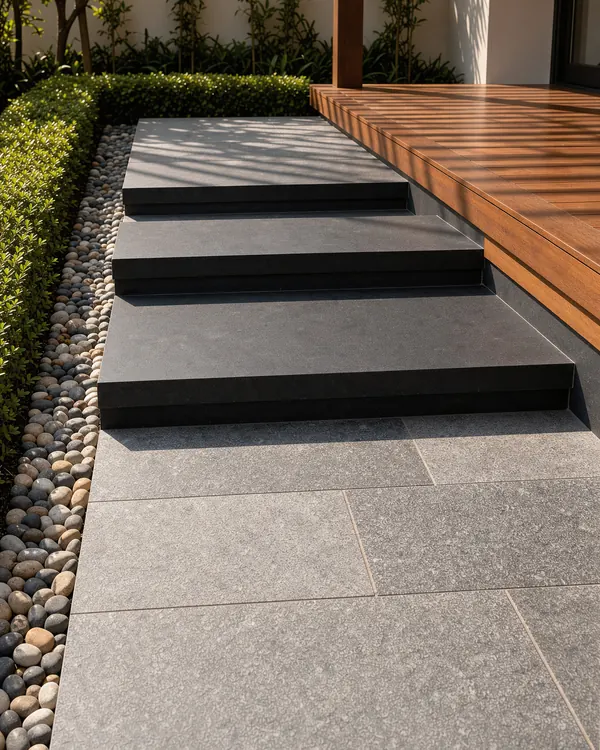
Stone paving, steps, decks, pergolas, water features and the drainage beneath them.
Explore hardscape →A location, a few photos and a rough size are enough to start. We visit, then share a layout and an itemised BOQ.