
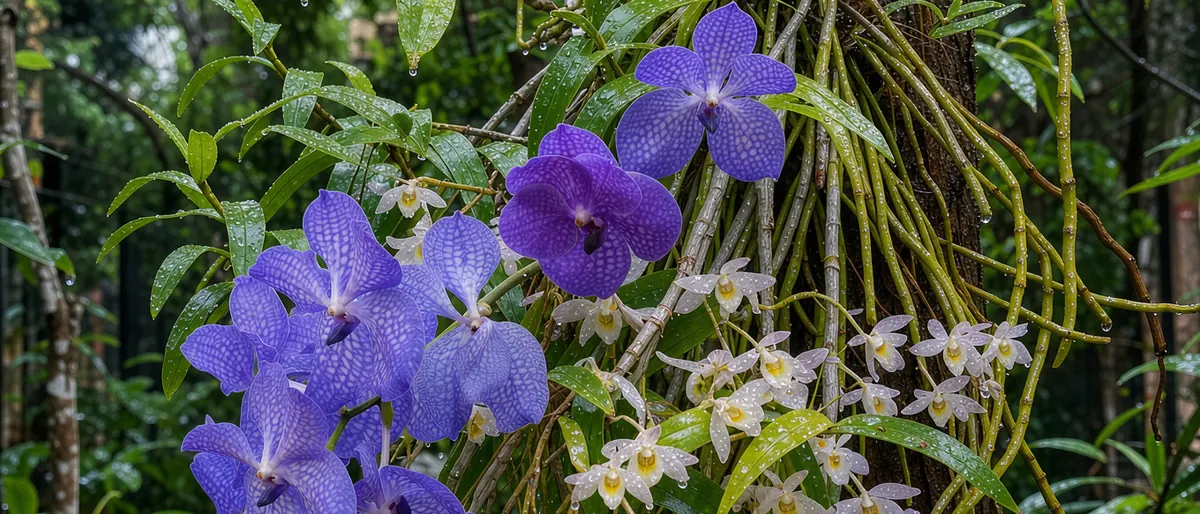
Short answer: In Mumbai, Dendrobium, Oncidium, Vanda and Mokara grow well outdoors in bright, filtered light, mounted on trees or in baskets. Phalaenopsis does best indoors or in deep shade. Cattleya suits bright terraces with good airflow. Cymbidium prefers cooler hill climates and is best treated as a seasonal display in the city.
Why Mumbai suits orchids
Most tropical orchids are epiphytes: in the wild they grow on tree branches, holding on with thick aerial roots that take moisture from rain and humid air. Mumbai's warm temperatures and high humidity, especially from June to October, are close to what many of them are adapted to. The two challenges are the hot, dry months before the monsoon and the risk of rot while plants sit wet in the rains.
Six orchids that do well
| Orchid | Light | Best for |
|---|---|---|
| Dendrobium | Bright, filtered (about 50% shade) | Balconies, terraces, tree trunks; flowers much of the year |
| Oncidium | Bright, filtered (about 50% shade) | Mounts and hanging baskets; sprays of small yellow flowers |
| Vanda | High light (about 30–50% shade) | Slatted baskets and open trees; needs frequent water in the dry season |
| Mokara | High light, some direct sun | Sunny beds and borders; long-flowering |
| Cattleya | Bright light, good airflow | Bright terraces; large seasonal blooms |
| Phalaenopsis | Bright but indirect; heavy shade outdoors | Interiors, lobbies, shaded verandahs |
Light and shade
Light decides more than anything else whether an orchid flowers. Outdoors, shade-net density is a useful guide: Phalaenopsis wants heavy shade, around 70–75%; Dendrobium and Oncidium around 50%; Vanda and Mokara the most light, roughly 30–50% shade. Leaves tell you if the balance is right: dark green, soft leaves usually mean too little light, while yellowing or scorched patches mean too much.
Indoors, a Phalaenopsis is happiest near a bright window that does not get hot direct sun, and away from the direct blast of an air conditioner.
Mounted or potted?
Mounting orchids on trees with coir and soft ties gives roots the air they want and looks natural. Rough-barked trees such as frangipani and mango work well. Baskets suit Vandas, whose roots should hang free. Pots with coarse bark, charcoal or similar open media suit Phalaenopsis and Cattleya. Garden soil is the one thing to avoid: it stays wet and rots epiphytic roots.
Watering through the year
| Season | What changes |
|---|---|
| June to September | Rain and humidity do much of the work. Keep water out of crowns, keep air moving and ease off feeding while plants sit wet. |
| October to February | Drier air. Mounted orchids may need watering or misting most days; potted ones when the medium is nearly dry. |
| March to May | Heat stress. Water early in the morning, add shade and mist around plants on hot afternoons. |
Common problems
- Rot in the monsoon: water collecting in the crown of a Phalaenopsis, or roots sitting in dense, wet media. Improve drainage and airflow.
- Sunburn in May: pale or scorched patches on leaves moved into stronger light too quickly. Add shade and acclimatise plants gradually.
- Scale and mealybugs: small sap-sucking insects on leaves and stems. Check plants regularly and treat early.
- Snails and slugs: they feed on buds and root tips in wet weather. Keep growing areas clean.
- No flowers: usually too little light, or a plant that needs a cooler or drier spell to set buds.
Planning orchids for a garden, terrace or lobby? See our orchid landscaping service.
Questions
Which orchid is easiest to grow in Mumbai?
Dendrobium hybrids are among the easiest outdoors in Mumbai: they tolerate bright light and heat, and flower for much of the year. Indoors, Phalaenopsis is the easiest.
Can Cymbidium orchids grow in Mumbai?
Not well over the long term. Cymbidiums need cool nights to set flowers, which hill climates provide and Mumbai does not. In the city they are best enjoyed as seasonal flowering displays.
Can orchids grow in garden soil?
Most tropical orchids sold in India are epiphytes and rot in garden soil. Grow them on trees, in baskets or in coarse, free-draining media such as bark and charcoal.