
04 · Irrigation
Irrigation designed with the planting
A good irrigation system waters each plant the way it needs, uses as little water as possible and largely runs itself. We zone drip, sprinkler and misting lines by plant type and exposure, filter for local water and automate the schedule, so the garden is looked after right through Mumbai's long dry season.
- Systems
- Drip, sprinklers, misting, automation
- For
- Beds, lawns, planters, trees and orchids
- Includes
- Design, installation, testing and handover
Scope
What we deliver
New systems, retrofits into existing gardens, and care for systems already in place.
Drip irrigation
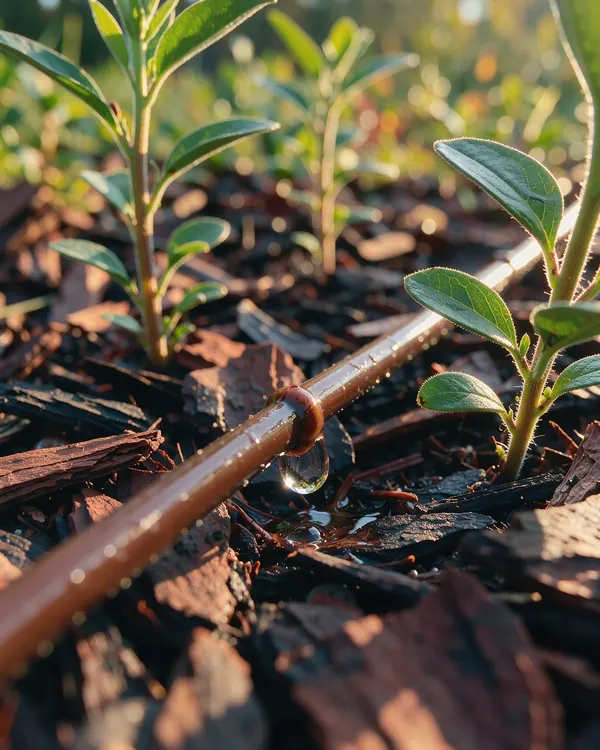
Inline drip lines for beds and hedges, emitters for trees and shrubs, and micro-tubes for planters and pots.
Sprinkler systems
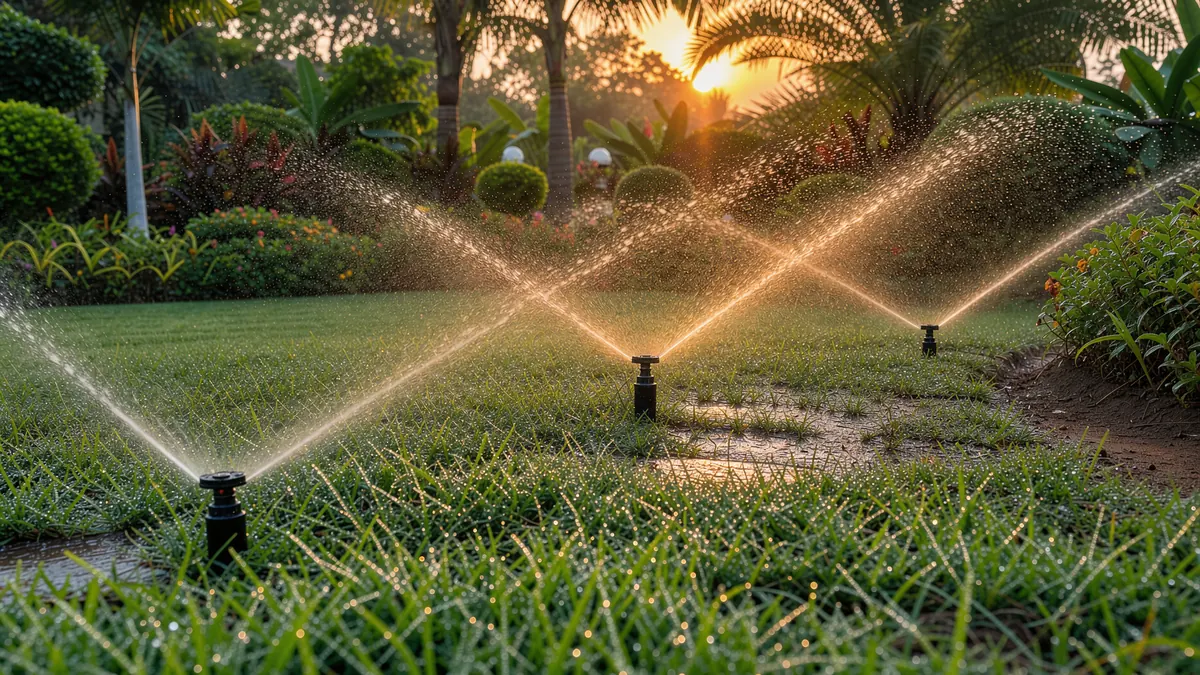
Pop-up sprays for small lawns and rotors for larger ones, laid out head-to-head for even coverage.
Misting and fogging
Fine misting for orchids, ferns and shade houses, to raise humidity without soaking the plants.
Automation and sensors
Controllers, solenoid valves, and rain or soil-moisture sensors, with phone control where you want it.
Pumps, tanks and filtration
Booster pumps, tank connections, disc or screen filters, pressure regulation and fertigation (feeding through the system).
Audits, repairs and care
Checks for leaks and blocked emitters, flushing, and schedule changes as the seasons turn.
Choosing well
Drip, sprinkler or misting?
Most gardens need more than one. Each zone gets the method that suits what grows there.
| Method | Best for | Water use | Watch for |
|---|---|---|---|
| Drip | Beds, hedges, planters, trees | Most efficient: water goes to the roots with little evaporation or run-off | Needs fine filtration (typically 120 mesh) and periodic flushing |
| Sprinklers (sprays and rotors) | Lawns and dense groundcover | Good when laid head-to-head and run early in the morning | Wind and evaporation losses; keep spray off paving, walls and orchids |
| Misting | Orchids, ferns, shade houses, propagation | Raises humidity rather than wetting the soil | Needs clean, filtered water; hard water leaves mineral spots on leaves |
Read more: Drip or sprinkler? Choosing irrigation for gardens and terraces
Method
How we build an irrigation system
The order matters as much as the materials.
- 01
Test water and pressure
Source (tank, municipal or borewell), flow and pressure, and water quality.
- 02
Zone and lay out
Separate zones for lawn, beds, planters and orchids, by sun, shade and plant type.
- 03
Install
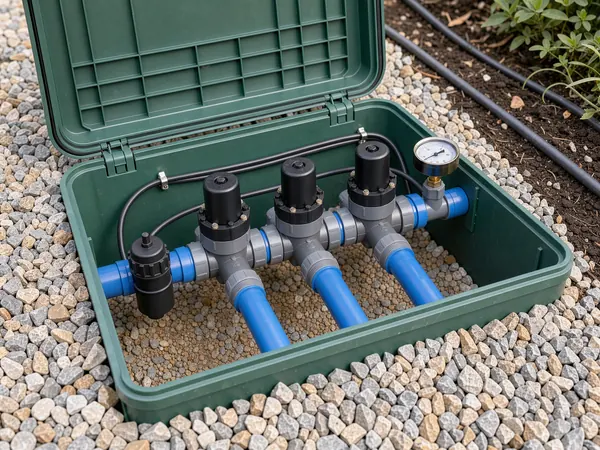
Mainline, sleeves under paving, valves in accessible boxes, filters and the controller.
- 04
Test and tune
Pressure, coverage, emitter flow and a programme set for the season.
- 05
Hand over
As-built layout, controller settings and a season-by-season schedule.
Irrigation in Mumbai, season by season
Monsoon · June to September
Rain or soil-moisture sensors stop the system watering when the ground is already wet.
Dry season · October to May
Schedules step up as temperatures rise, with the longest run times in April and May.
All year · water quality
Borewell and tanker water is often hard: filtration, pressure-compensating emitters and regular flushing keep lines clear. Low pressure on upper floors usually needs a small booster pump.
Drip or sprinkler: which is right for my garden?
Most gardens need both. Drip suits beds, hedges, planters and trees because it puts water at the roots. Sprinklers suit lawns, where even coverage matters. Orchids and ferns often do best with misting.
Can irrigation be automated or run from my phone?
Yes. A controller runs each zone on its own schedule, and Wi-Fi controllers let you adjust or pause watering from a phone. Rain and soil-moisture sensors skip watering when it is not needed.
How much water does drip irrigation save?
Drip usually uses noticeably less water than hand-watering or sprinklers for beds and planters, because it wets only the root zone and loses little to evaporation and run-off. The saving depends on the garden, the schedule and how well the system is maintained.
Can you add irrigation to an existing garden?
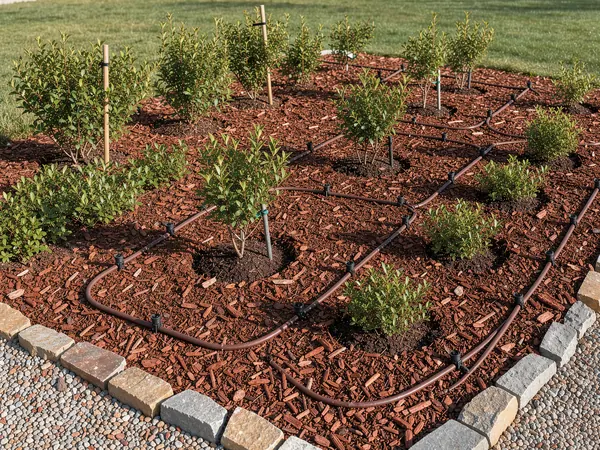
Yes. Drip lines can run under mulch with little disturbance, and pipes can cross paths through sleeves or along edges. We survey first to route pipes with the least digging.
Does hard water affect drip irrigation?
It can. Minerals in hard or borewell water build up in emitters over time. Good filtration, pressure-compensating emitters and periodic flushing keep a system working.
Works with
Related disciplines
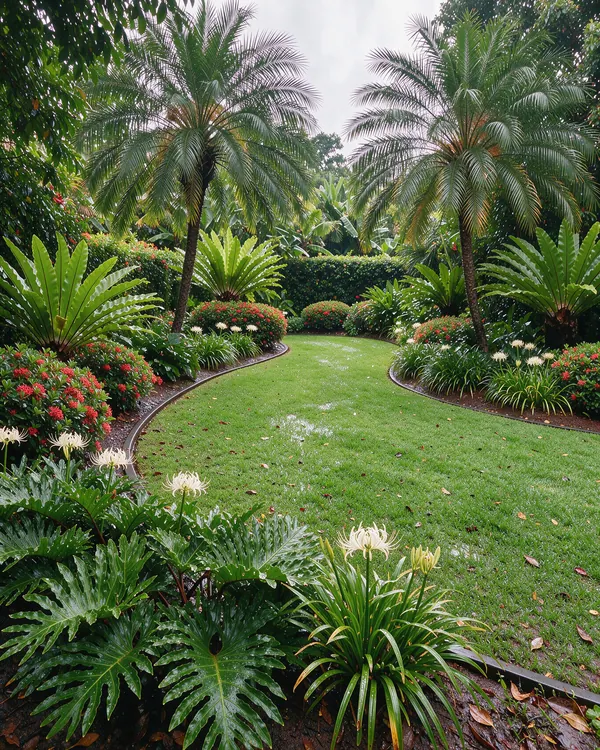
Softscape
Soil, lawns, trees, palms and layered planting for gardens, terraces and podiums.
Explore softscape →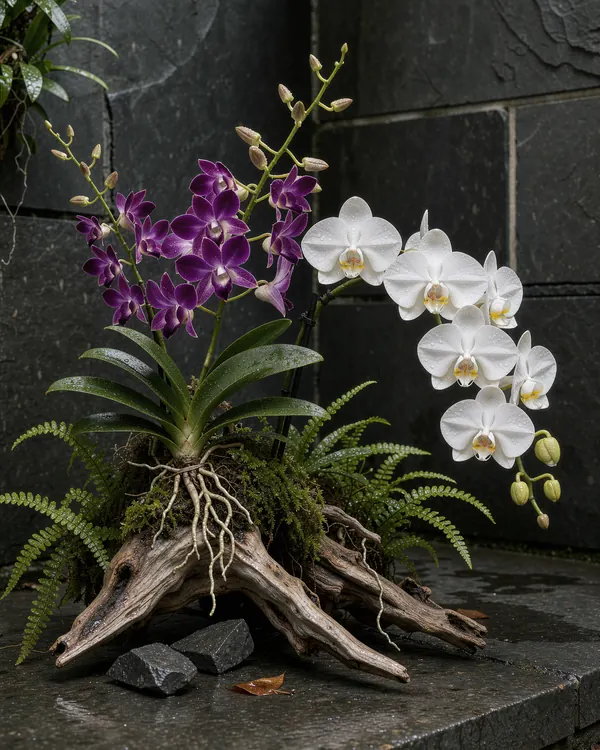
Orchids
Orchid gardens, tree-mounted orchids, orchid walls and lobby displays, with care and rotation.
Explore orchids →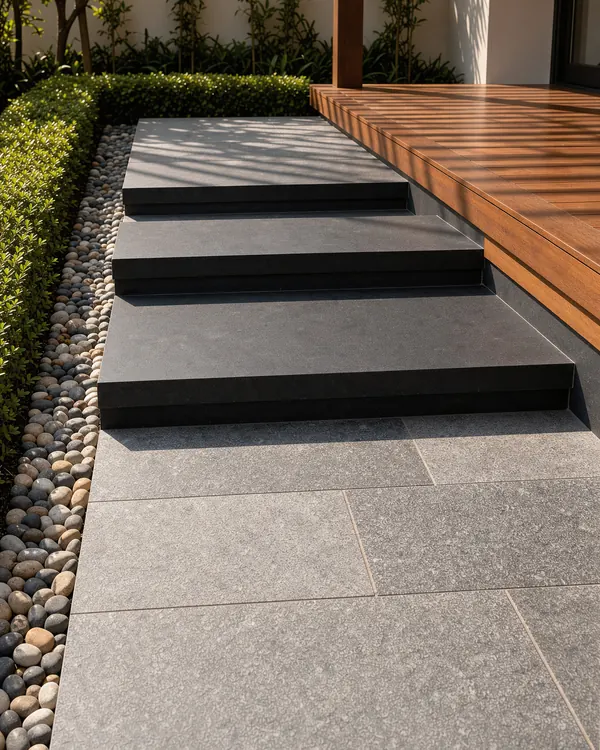
Hardscape
Stone paving, steps, decks, pergolas, water features and the drainage beneath them.
Explore hardscape →Planning irrigation? Tell us about the site.
A location, a few photos and a rough size are enough to start. We visit, then share a layout and an itemised BOQ.